About

Who is inquiring.

Conscious Living inquiries are designed by Andrew Fayad. They draw on two sources: the teachings of the masters, and published research.

Most self-work is focused on solving problems. Often we miss seeing what is actually here. Each inquiry is based on research specific to the situation. They help us gain insight into ourselves and land on a question or a practical step we choose.

How it worksGet in touch

Early testing

Across all six inquiries, over one week.

27started
21finished
9copied to keep

How it works

Why the inquiries are built this way.

The research that shaped the structure, what the AI is asked to do, the output check we are adding, what happens to what we write, and where this way of asking comes from.

Why we look beyond reflection

Insight was the only measure that predicted all six.

One study that shaped the approach measured several forms of self-focused attention in 121 college students against six dimensions of psychological wellbeing. The Insight measure (from the Self-Reflection and Insight Scale) was the only positive predictor across all six, and life satisfaction as well.

Self-acceptance

A positive attitude toward ourselves, including qualities we like and qualities we do not.

Positive relations

Warm, trusting relationships with other people.

Autonomy

Acting from our own standards rather than relying on others' approval.

Environmental mastery

Managing the demands of daily life.

Purpose in life

Having goals and a sense of direction.

Personal growth

Continuing to develop, and seeing ourselves as capable of change.

What else the study found

Self-reflectionFrom the Self-Reflection and Insight Scale (SRIS): the tendency to examine our own thoughts and behaviour. Not a significant predictor across the six.
ReflectionFrom the Rumination-Reflection Questionnaire (RRQ), a separate reflection measure positively predicted Personal Growth, one of the six.
RuminationThe study's rumination measure negatively predicted three of the six.

Harrington & Loffredo (2011). The Journal of Psychology, 145(1), 39–57. 121 college students, self-report, correlational. Read the paper

This study did not test Conscious Living, and it does not show that insight causes wellbeing. It shaped one design decision: the inquiries are written to move toward something specific rather than let reflection run on indefinitely.

How an inquiry gets made

Five steps before anyone sees one.

01

Start with the situation

Define what the inquiry is there to examine, and what it is not.

02

Read the research

Published work on that situation, read in full, without turning a study into advice.

03

Write the boundaries

What the model may ask, what it must not assume, and where it must not diagnose or prescribe.

04

Test it

Run it over and over, looking for invented details, advice and overstatement.

05

Check the output

Readings are written inside instructions written and tested for each situation. An output check is being added.

What the AI does

An AI model writes each reading. We set the structure and the limits around it.

The model works only with what is written in the inquiry and the instructions for that particular situation. Those instructions keep the reading close to what actually happened, rule out diagnosis and prescriptive advice, and bring the inquiry to land rather than letting it run on as a conversation.

The model can still get things wrong. That is why every inquiry is tested, and why an output check is being added.

Every inquiry runs inside limits like these

  • No motives, history or details the person did not give.
  • No diagnosis, and no labels for the person.
  • No deciding what the person should do.
  • The reading stays on the moment that was written.
  • The inquiry lands, rather than turning into an open conversation.

What happens to what we write

Free inquiries are processed, not kept.

Free inquiries

We do not keep the text of a free inquiry in our database or our application logs.

Model processing

The text goes to Anthropic's API to write the reading, under terms that exclude training on it by default and limit how long it is kept.

Plus

Plus saves an inquiry only when a signed-in member chooses to save it, so it can be read alongside later ones.

If the system changes

This page describes how the system actually works. If that changes, this page changes with it.

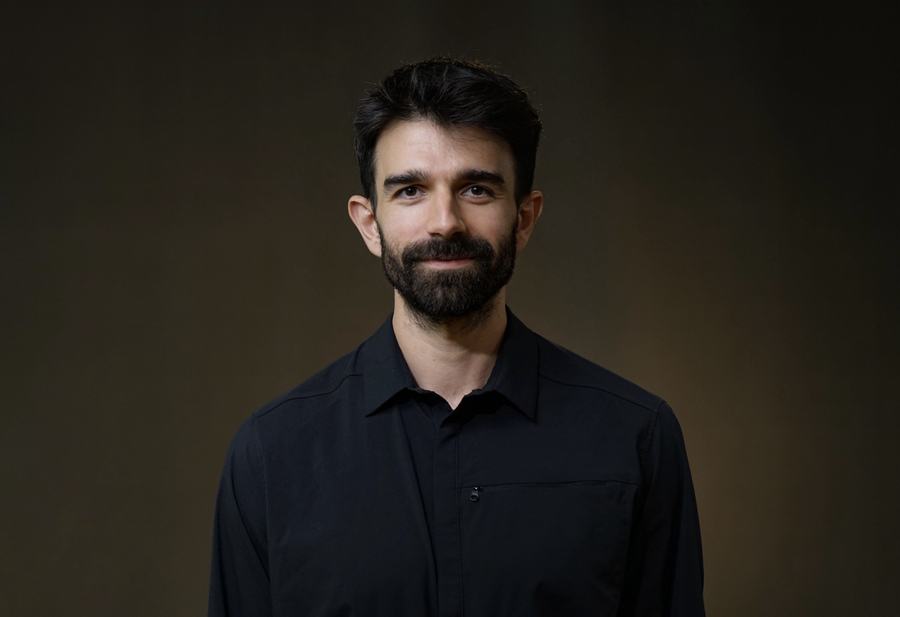
Andrew, who runs Conscious Living
Andrew · Conscious Living

Who runs this

The person behind it.

I’m Andrew. I make things for a living: films, photographs, and the words that go with them. I work between New York and Malaysia, and for years I’ve been studying with Dhyan Vimal and directing the creative work of his institute.

Conscious Living is mine to run. I read the papers, write the instructions each inquiry follows, test them until a reading is worth reading, and design the pages. There’s no team behind it, and no one here reads what you write.

I’m not a therapist or a coach, and I’m not trying to become one. What interests me is the question that’s still with you an hour after you close the page.

How it started

It started with something that annoyed me. I’d take a situation that was bothering me to an AI chat and get advice I hadn’t asked for, or encouragement. The conversation went everywhere and left me with nothing to carry.

What I was learning from my teacher works the other way: one moment, looked at closely, until something specific shows up. So I built the first inquiry for a reaction of my own I kept having, and spent most of the time on the instructions that stop the model from advising me.

Friends tried it, told me where it was thin, and I rebuilt it. Then came one for the thing we keep putting off, and one for the moment nobody responded. Six are live now, each made for one situation rather than for everything.

The research came in the same way. I wanted to know whether looking at ourselves helps at all, found the studies saying it depends on how we look, and built that into the shape of every inquiry. The name came from my teacher.

Sources and lineage

Two sources, one question.

Asking instead of advising is much older than this product. Socrates worked through questions. Krishnamurti used inquiry throughout his teaching. Dhyan Vimal's teaching shaped how Conscious Living approaches it.

Research plays a different part. When a study informs an inquiry, we name the study and say what it found.

Neither a paper nor a teacher decides what is true about the person doing the inquiry.

We call the practice conscious living.

Research

What a published study measured and found.

Teaching

What a named teacher said, quoted or paraphrased as such.

Inquiry

The question we ask from those sources. Not a claim that the source answered it.

Insight, rumination and self-reflection

Harrington & Loffredo (2011). The Journal of Psychology, 145(1), 39–57.

In 121 college students, the Insight measure of the Self-Reflection and Insight Scale (SRIS) was the only positive predictor across all six dimensions of psychological wellbeing and satisfaction with life. Rumination negatively predicted three dimensions. A separate reflection measure positively predicted Personal Growth. Read the paper

The ideal road not taken

Davidai & Gilovich (2018). Emotion, 18(3), 439–452.

Across six studies, lasting regrets were more often tied to falling short of the ideal self than the ought self. Asked for their single biggest regret in life, 76% named an ideal-self regret, something connected to not becoming the person they hoped to be. 24% named an ought-self regret, tied to duties and responsibilities. This research informs Not Yet Yourself. Read the paper

Contact

Get in touch.

Corrections are welcome, especially about the research.